Stay
THE IMPERIAL HOTEL KYOTO – In with the Old and New
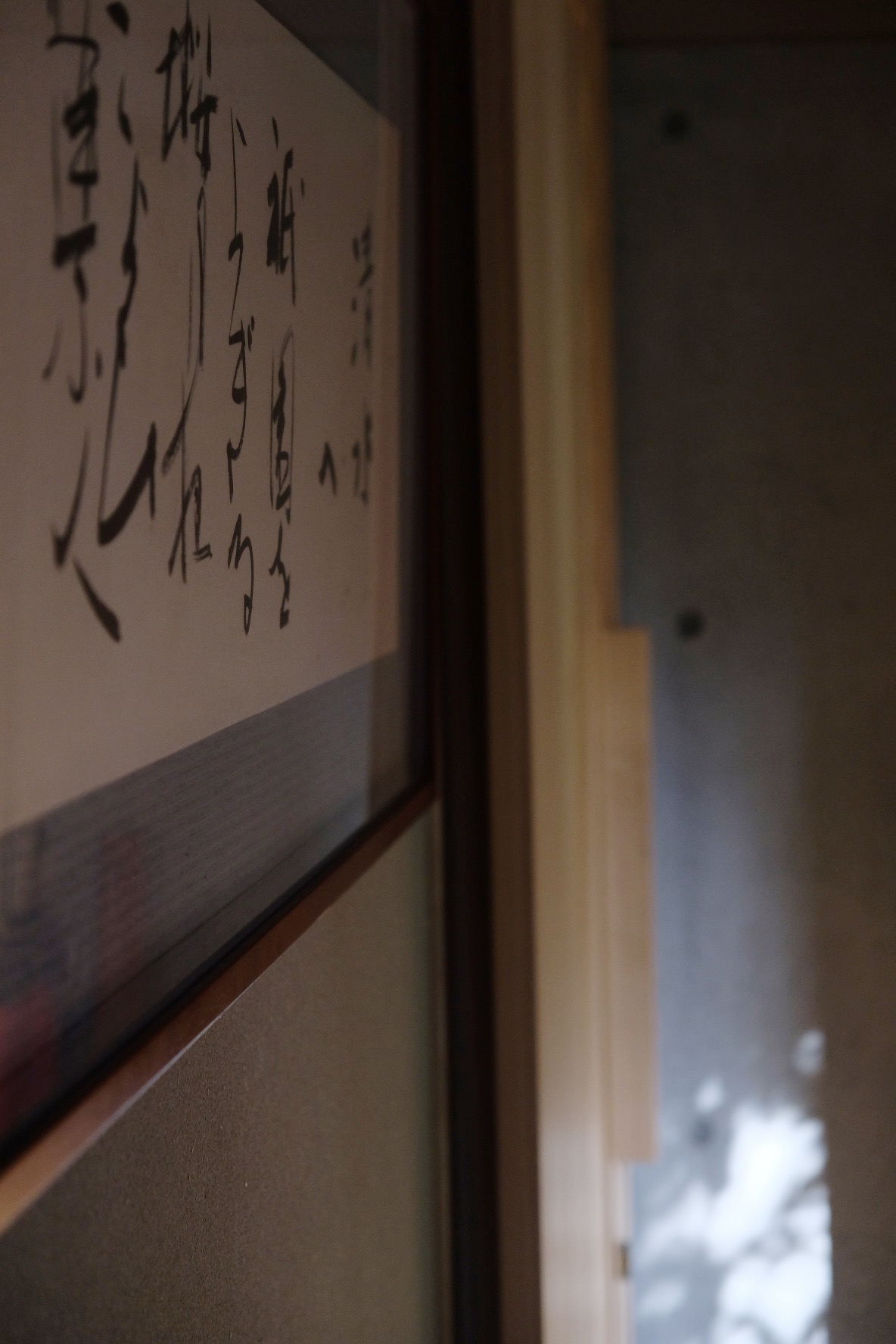
No matter what is said
it is Gion I love.
Even when I sleep
beneath my pillow
the water flows…
Written in the early 20th century by poet Yoshii Isamu, who held a deep admiration for Gion, this poem captures the quiet, enduring hold the district has long had over artists, tastemakers, and cultural figures.
Gion remains a cultural hub, the discreet heart of Kyoto where geiko and maiko entertain behind closed doors, and rows of traditional machiya line softly glistening stone pathways. It is a world shaped by nuance and discretion, where entry is still earned, and where even one of Japan’s most celebrated designers would not pass without proper introduction.
It is perhaps only fitting, then, that the new Imperial Hotel, a prestige Japanese hotel brand, has opened its doors here within the walls of a historic theater dedicated to the performing arts.
The 55-room Imperial Hotel, Kyoto marks the brand’s first new opening in over 30 years, bringing its portfolio to four properties and extending a legacy that spans 135 years.
The original Imperial Hotel in Tokyo was the first in Japan to host international luxury guests, setting a new standard for hospitality in the country. Its celebrated second building, designed by Frank Lloyd Wright, was conceived as the epicenter of Tokyo’s social life, a place where architecture and culture merged.
In much the same way as Gion, it became a stage for cultural gathering: a meeting point for world leaders, cultural figures, and film stars, where social gathering unfolded with sophistication.
DESIGN
“Are you going to the new Imperial Hotel in Kyoto? What is it like?”
You could hear the excitement in the taxi driver’s voice as he drove me to the hotel. But it wasn’t just the driver, everyone I spoke to in Kyoto seemed to share the same anticipation. The arrival of such a legendary Japanese hotel brand, not only in Kyoto but in such a significant and storied part of the city, got the city excited.
When I first heard that the Imperial Hotel would be opening in Kyoto, I felt that same excitement not only for the brand’s legacy, but also for who would be leading the design: architect Tomoyuki Sakakida of New Material Research Laboratory, one of my favorite design firms in Japan.
New Material Research Laboratory was established in 2008 by architect Tomoyuki Sakakida and artist Hiroshi Sugimoto, grounded in the philosophy that “Old is New.” It is this principle that Sakakida brings to the design of the hotel.
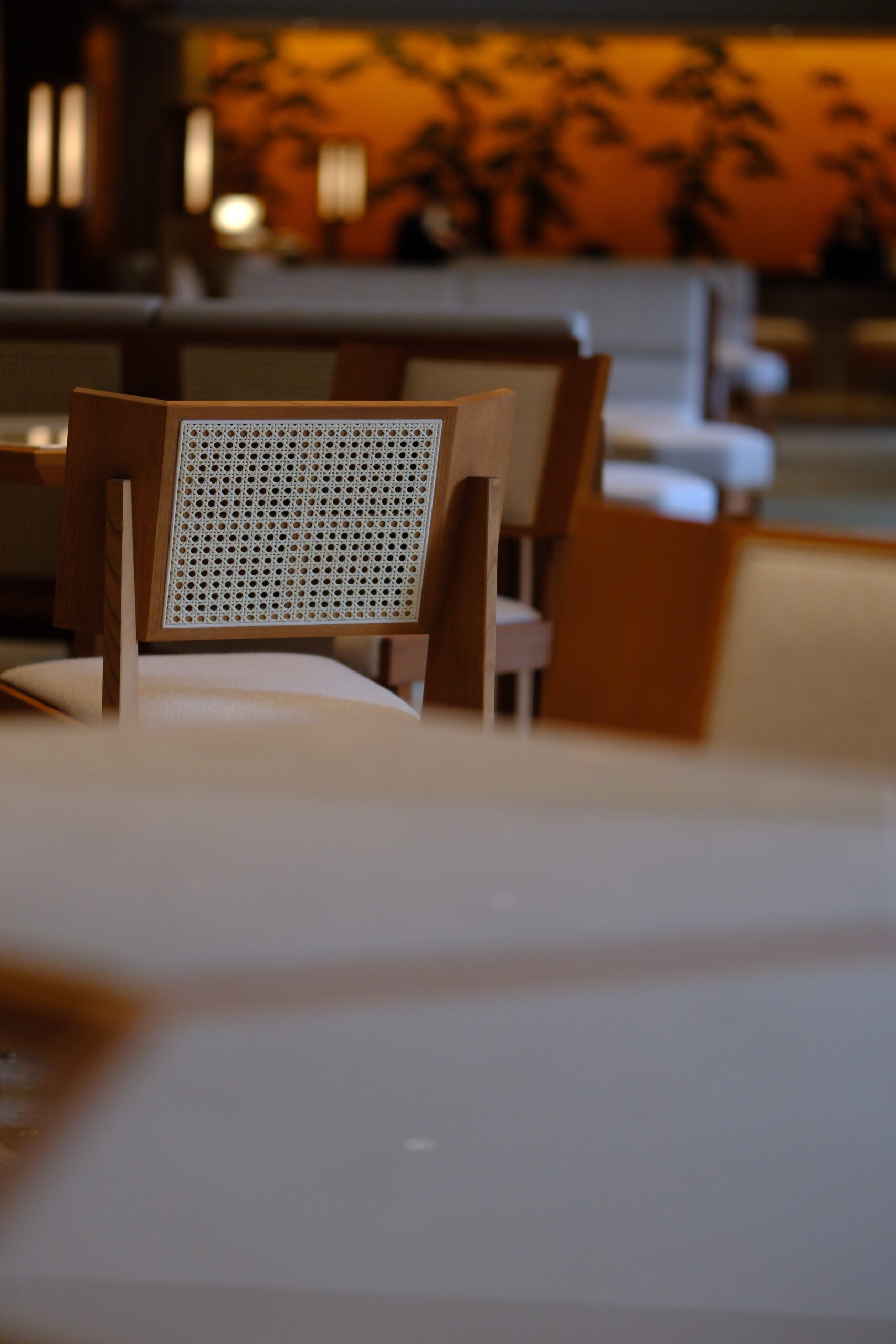
Sakakida incorporated elements from Frank Lloyd Wright’s Imperial Hotel, for example, reinterpreting the late Art Deco polygonal motifs prevalent when Yasaka Kaikan and Wright’s Imperial Hotel were completed. In true New Material Research Laboratory fashion, these references are not presented as fragments, but seamlessly harmonized into a singular architectural narrative.
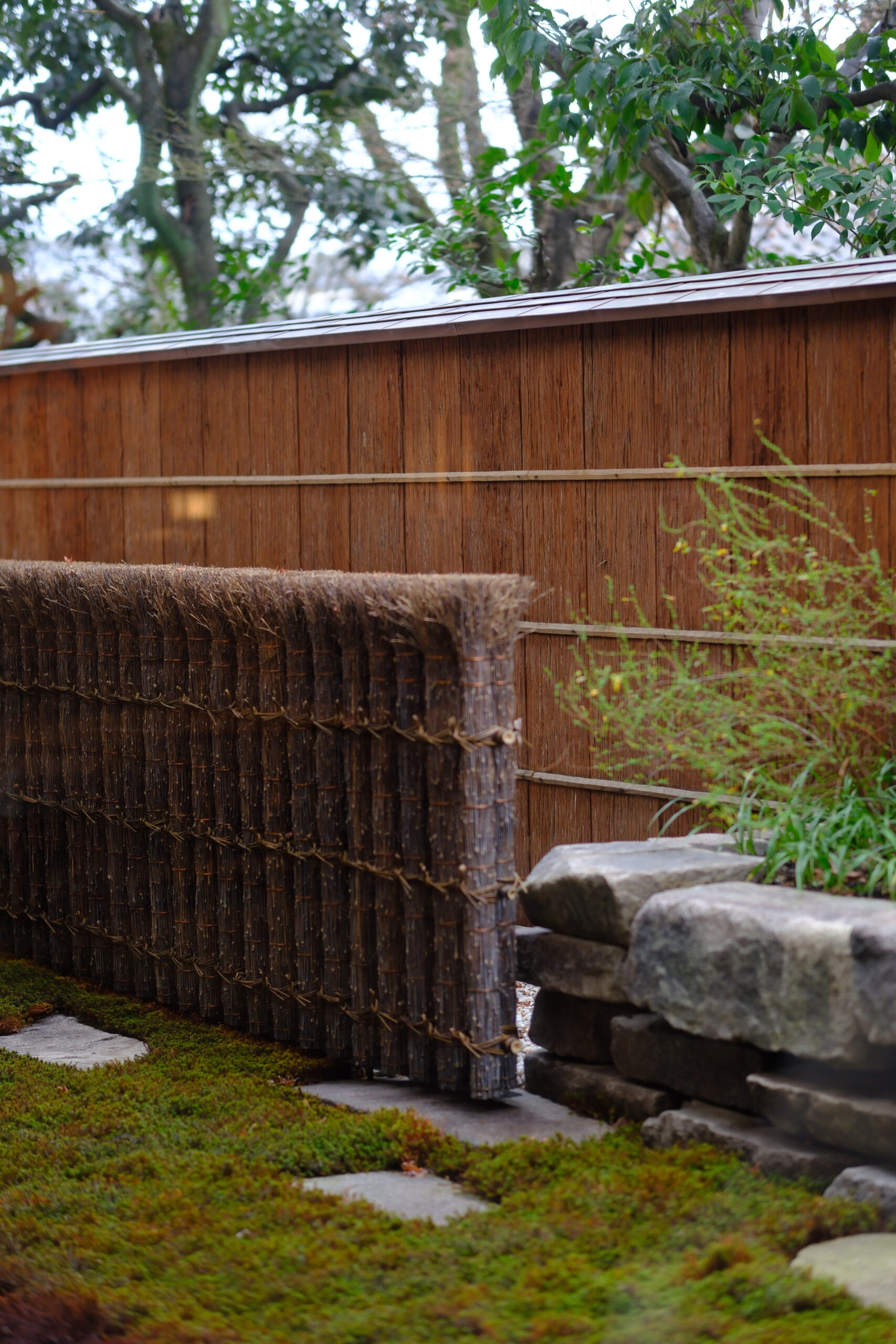
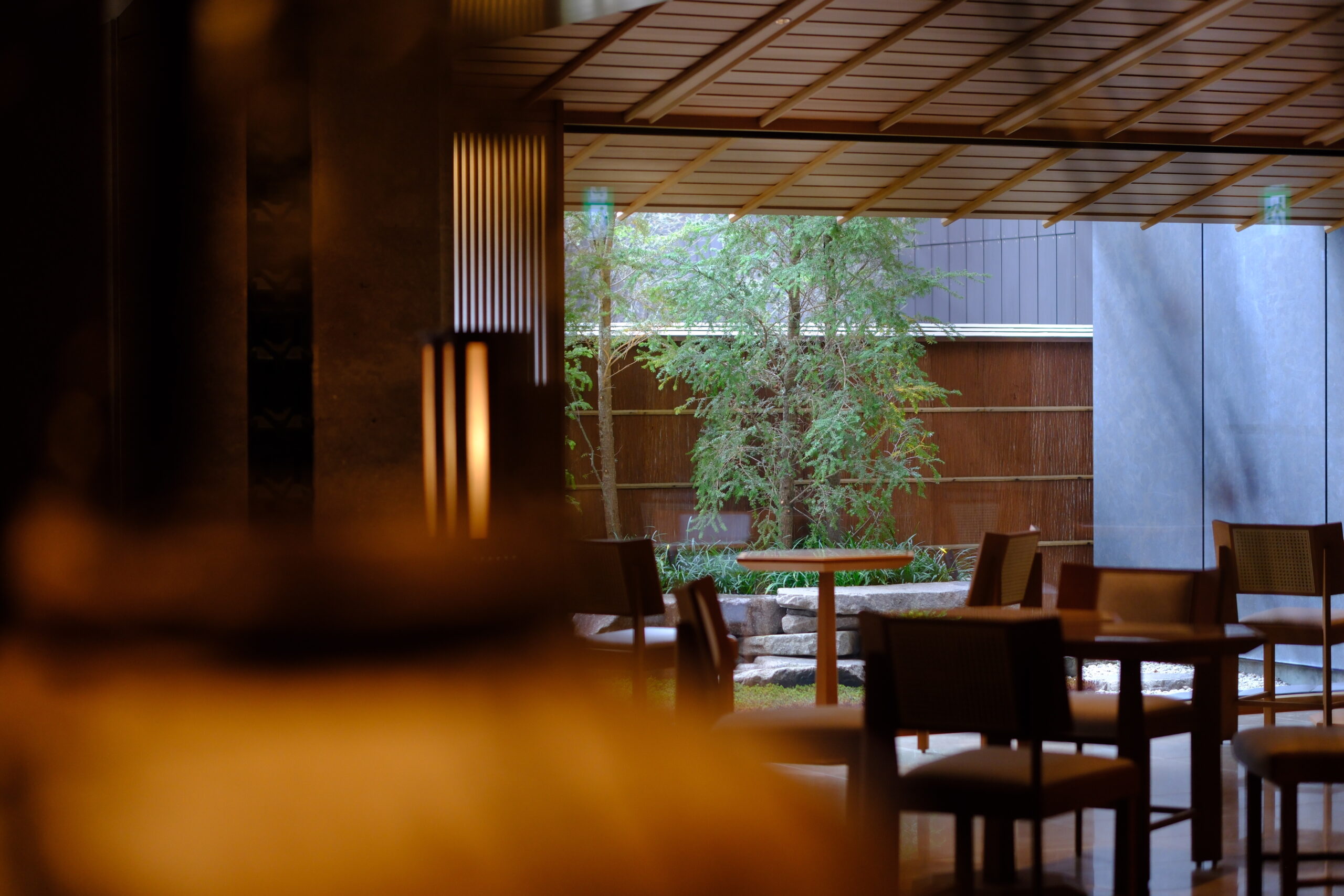
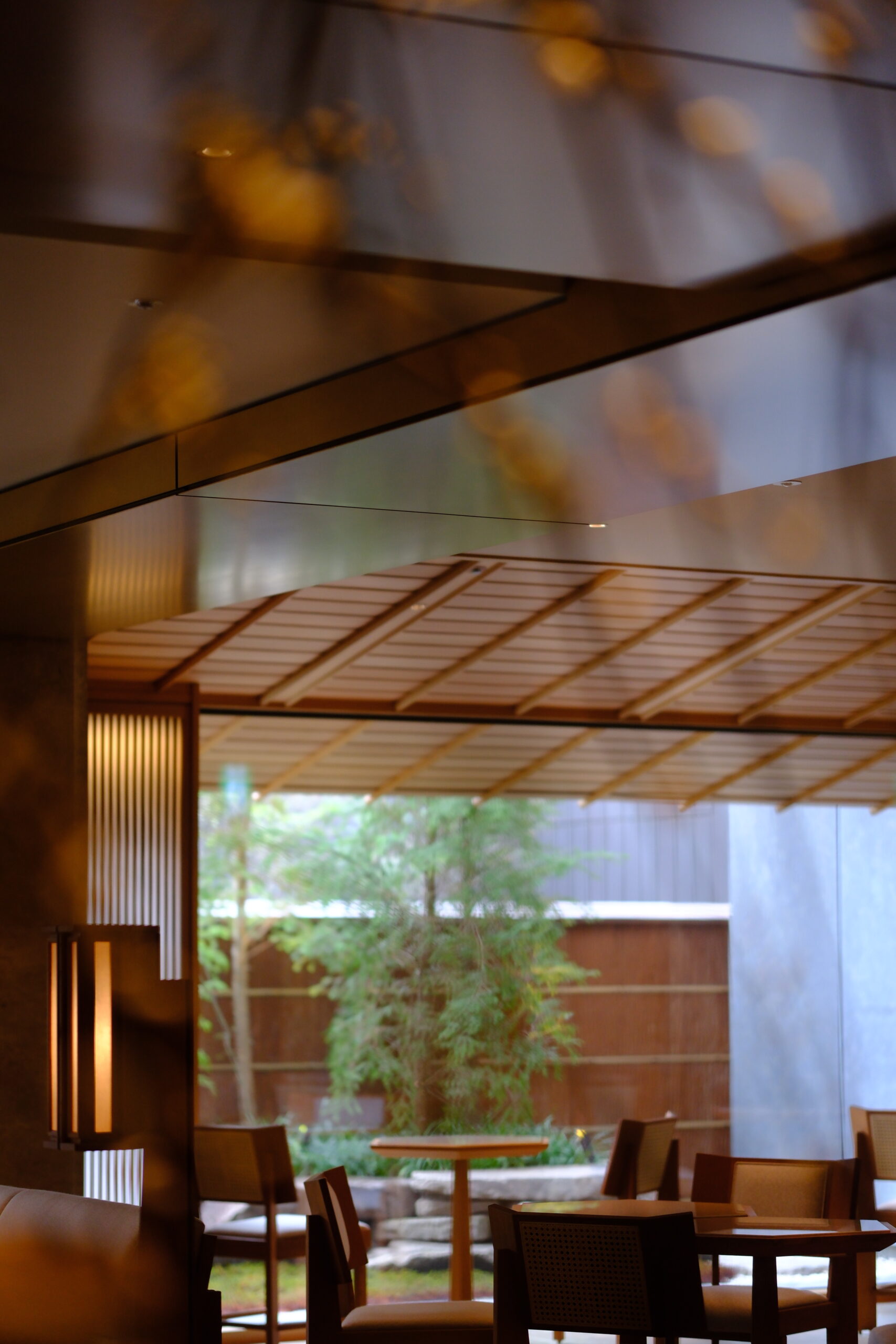
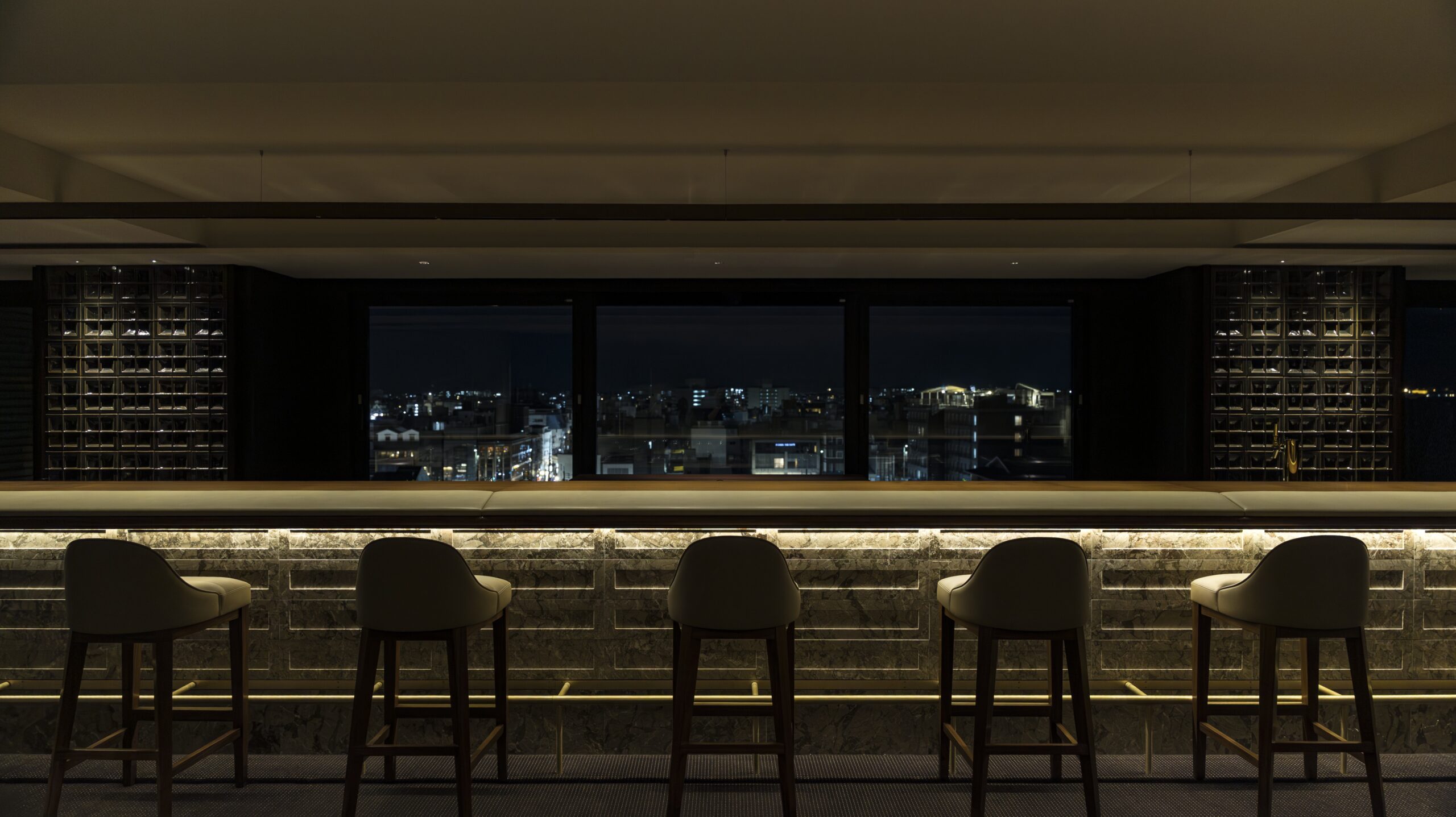
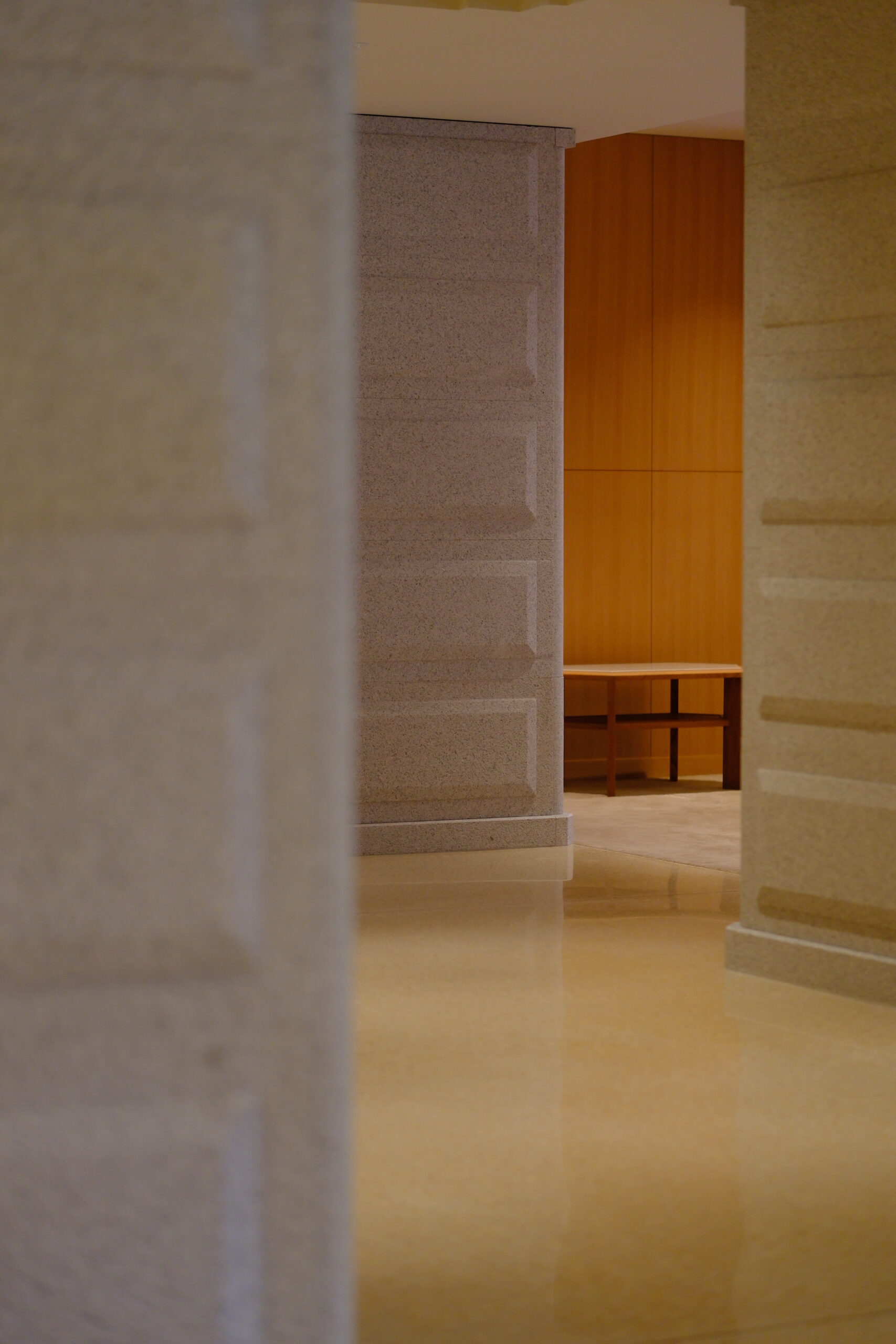
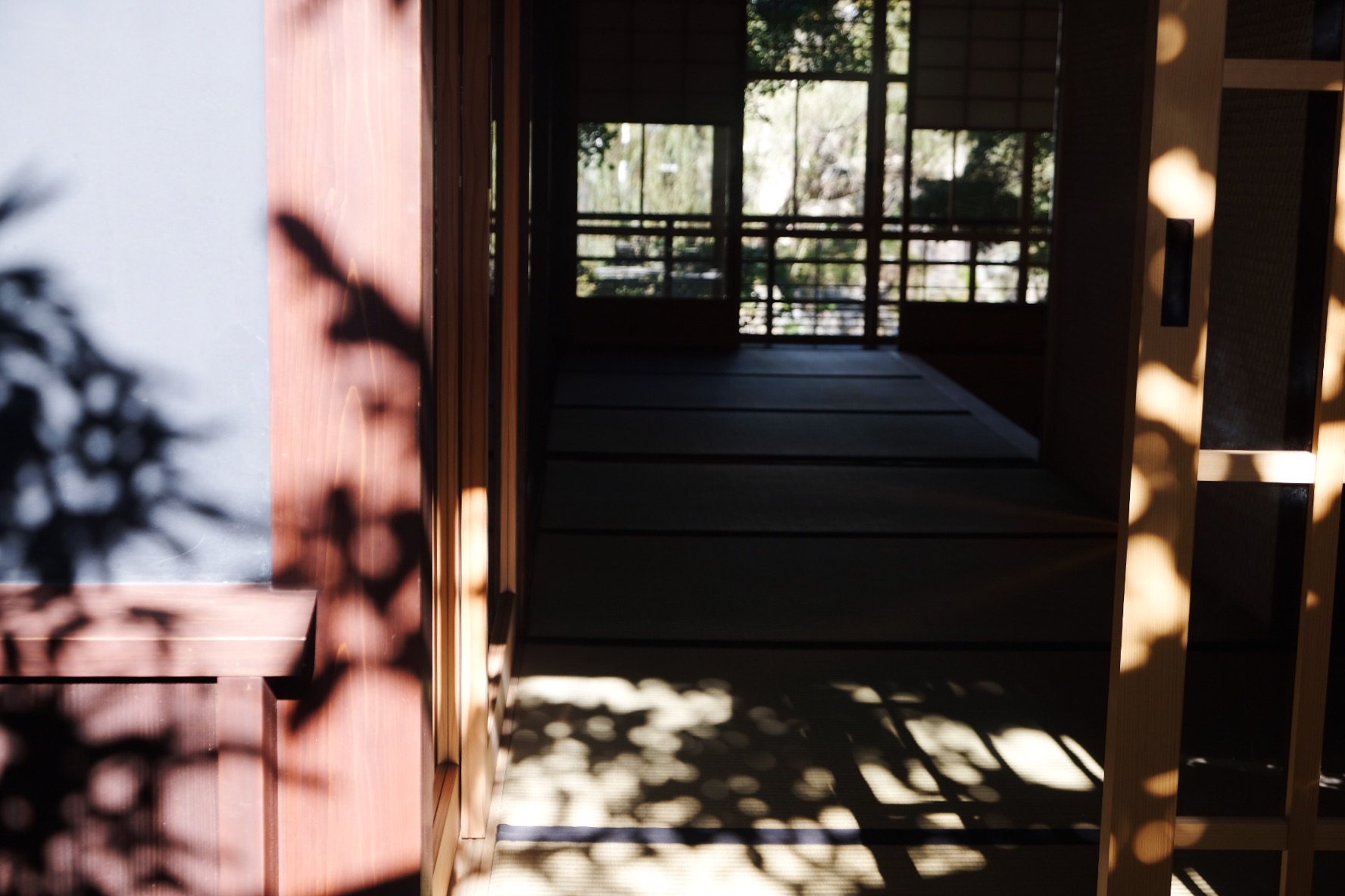
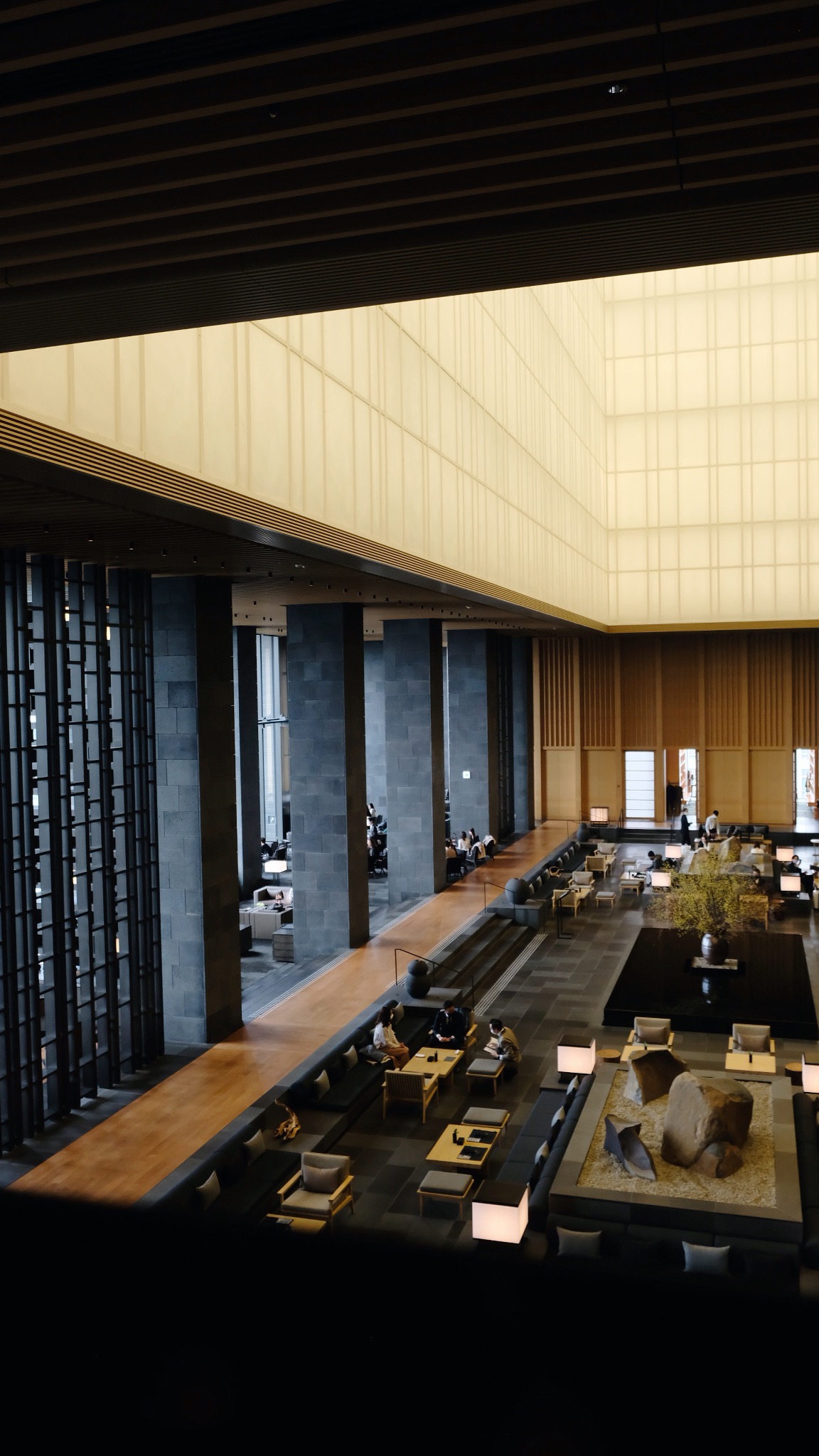
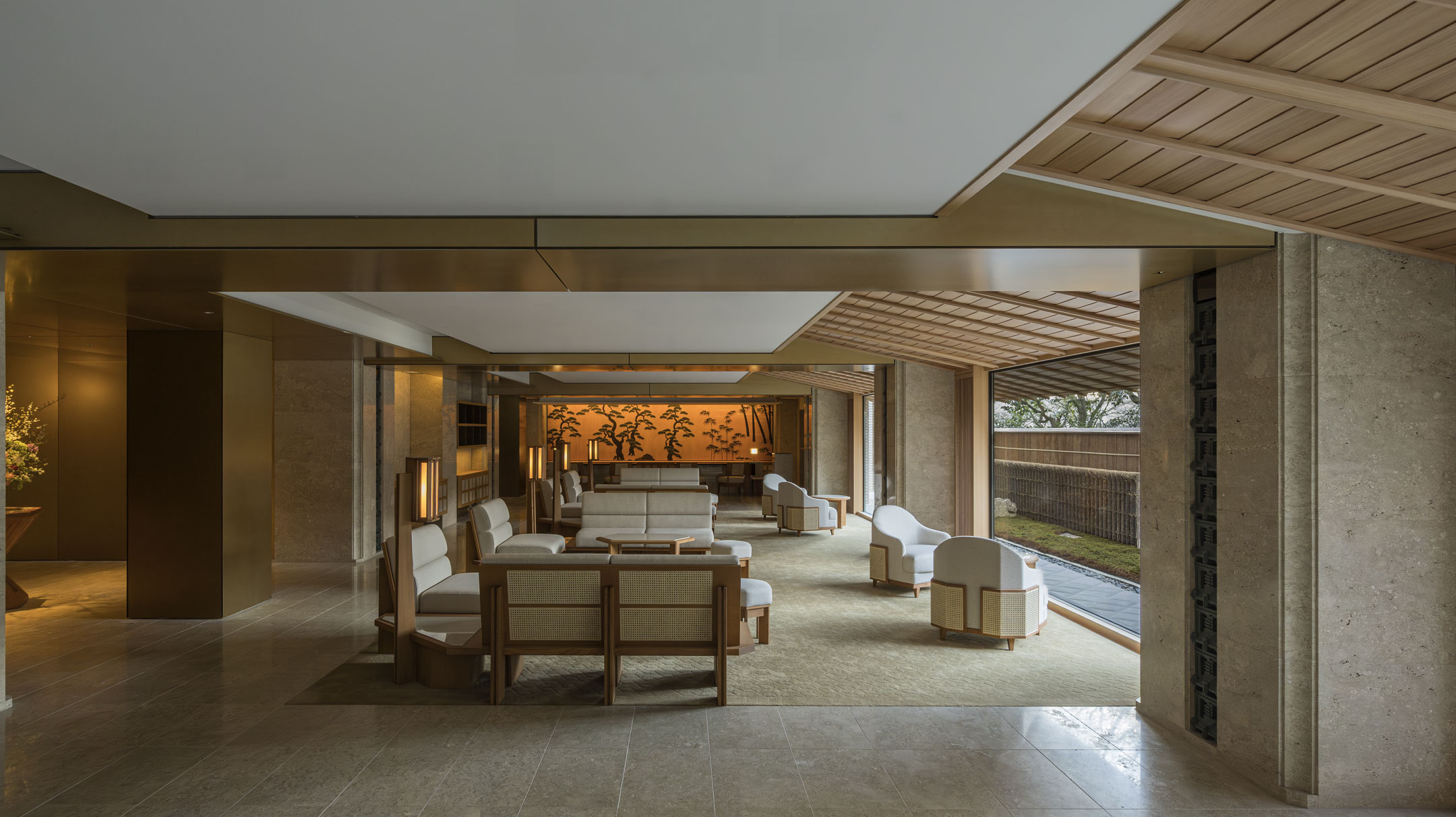
The interior reflects this dialogue, preserving the presence of the 90-year-old theatre while integrating Wright-inspired geometric motifs, alongside replicas of terra-cotta and Oya-stone pillars that echo the Wright Imperial. What defines Sakakida’s work is his use of primitive materials, stone and wood, woven effortlessly into refined Japanese architecture, creating a quiet yet striking sense of contrast.
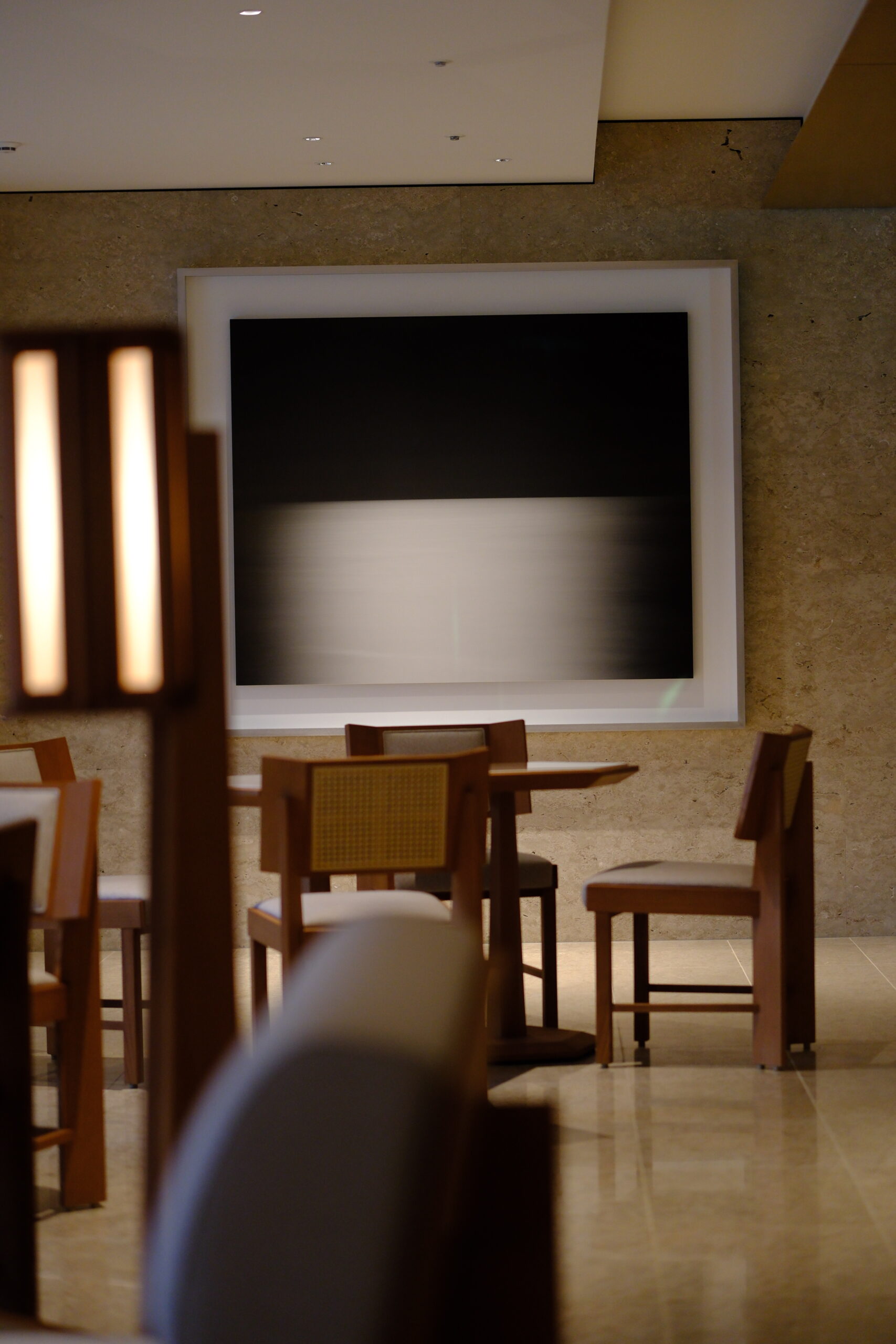
Sugimoto’s presence is also felt throughout. The executive lounge is framed by his works, while a gold-toned, Japanese-style panel depicting pine and bamboo sits in conversation with his iconic Seascape, welcoming guests just before they ascend to their rooms.
Sakakida says that both he and Sugimoto surround themselves with natural materials in their studio. Rather than relying on catalogues, they engage with materials directly, touching, smelling, and experiencing them firsthand. It is through these tactile encounters, and the ongoing dialogue they share around them, that much of their inspiration emerges.
HOSPITALITY
The guest lounge, located on the ground floor of the hotel, are concealed behind a door that can only be accessed with a room key. In true Gion “membership” style, the space remains a mystery to outsiders and is reserved exclusively for hotel guests.
It is a subtle expression of Japanese hospitality, creating a sense of comfort and intimacy, where guests are not only welcomed, but become part of the experience itself.
When speaking of the Imperial Hotel, two things often come to mind: Frank Lloyd Wright and the spirit of Japanese hospitality. The hotel is known for shaping a uniquely Japanese approach to hospitality, guided by the idea of how to make guests feel truly joyful. It introduced many firsts in Japan, including buffet-style restaurants and weddings held within hotels.
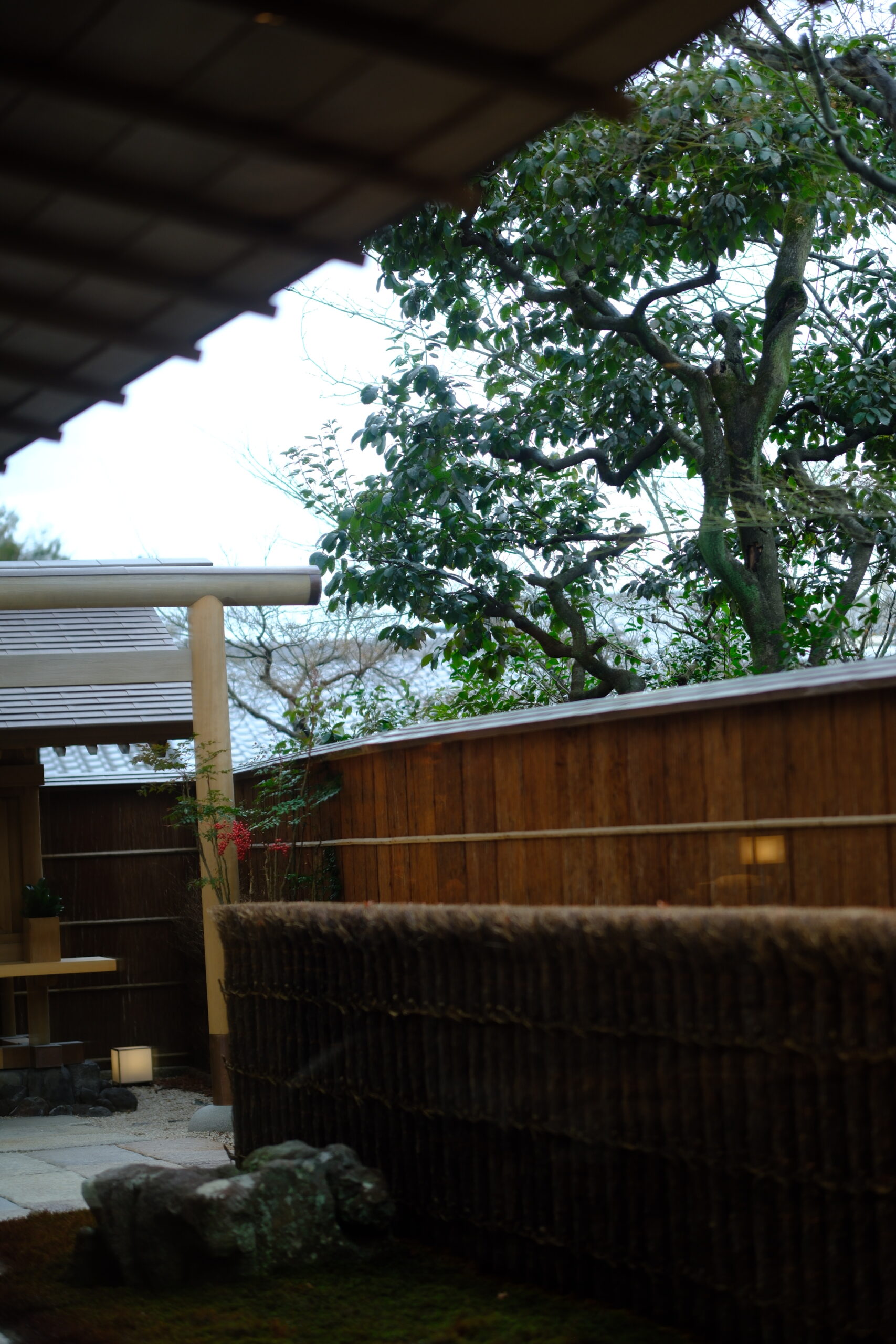
After the Great Kantō Earthquake destroyed many Shinto shrines in Tokyo, the Imperial created the first permanent shrine like alter within a hotel, allowing ceremonies and receptions to take place seamlessly in one space.
The staff are professional yet warm. When the woman at the concierge desk noticed me admiring Hiroshi Sugimoto’s work, she came over and thoughtfully shared more about it.
At the French restaurant REN, our group dined in a private room that felt relaxed rather than formal. The atmosphere was easy and welcoming, and the interaction with the chefs made us feel part of the experience. To top it off, we were surprised with personalized latte art, each one unique. One friend had his dog drawn into the foam, while mine was inspired by the Sugimoto artwork I had been admiring.
It was a small but thoughtful gesture that brought us so much joy, we found ourselves laughing and talking about it for the rest of the night.
THE ROOMS
“Didn’t you just have the best sleep?” Sakakida beams as I pass him in the hallway.
This marks his first hotel project, and to truly understand the essence of the Imperial Hotel brand, he shared that he stayed at the Imperial Hotel, Tokyo for a full month.
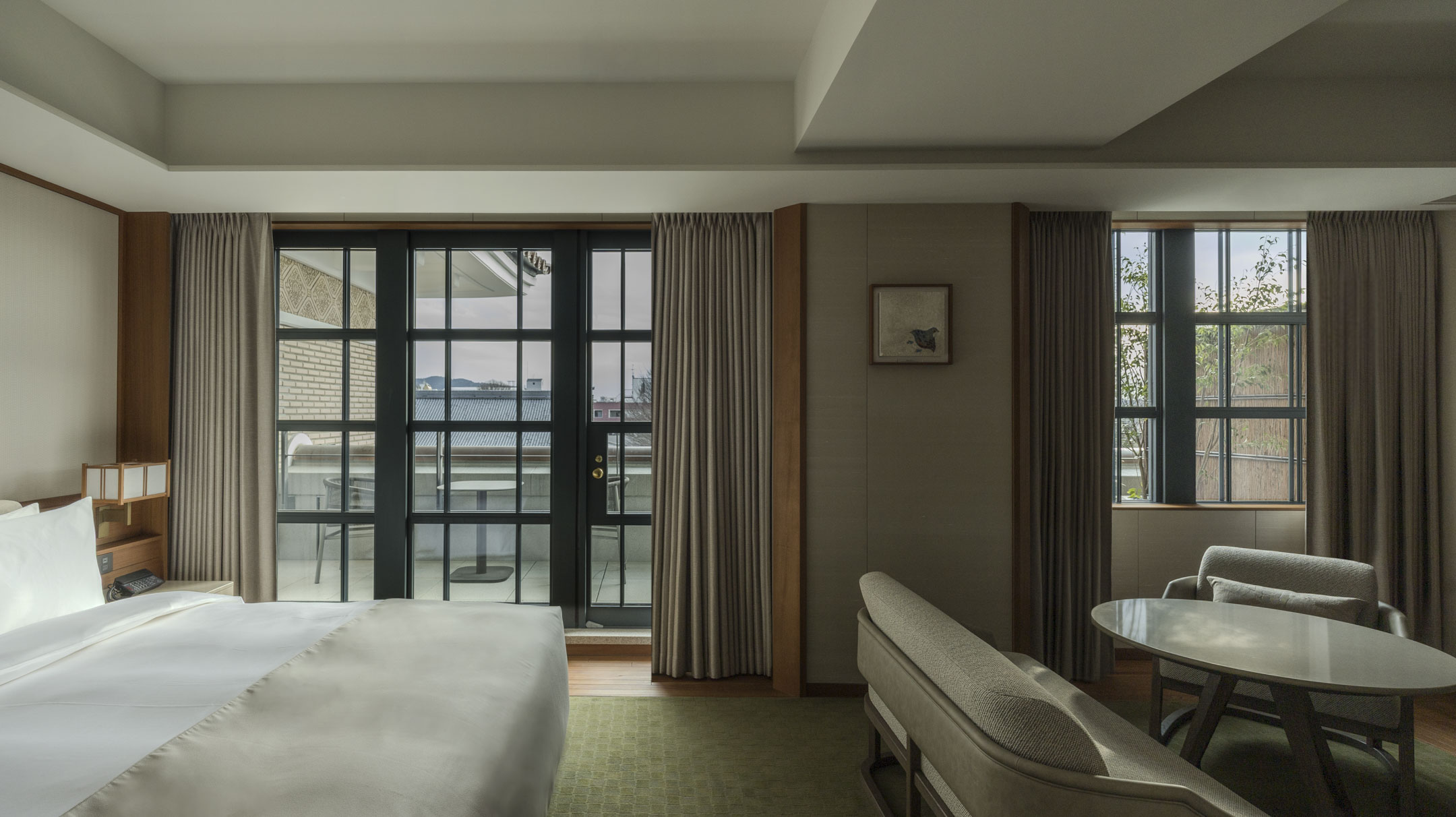
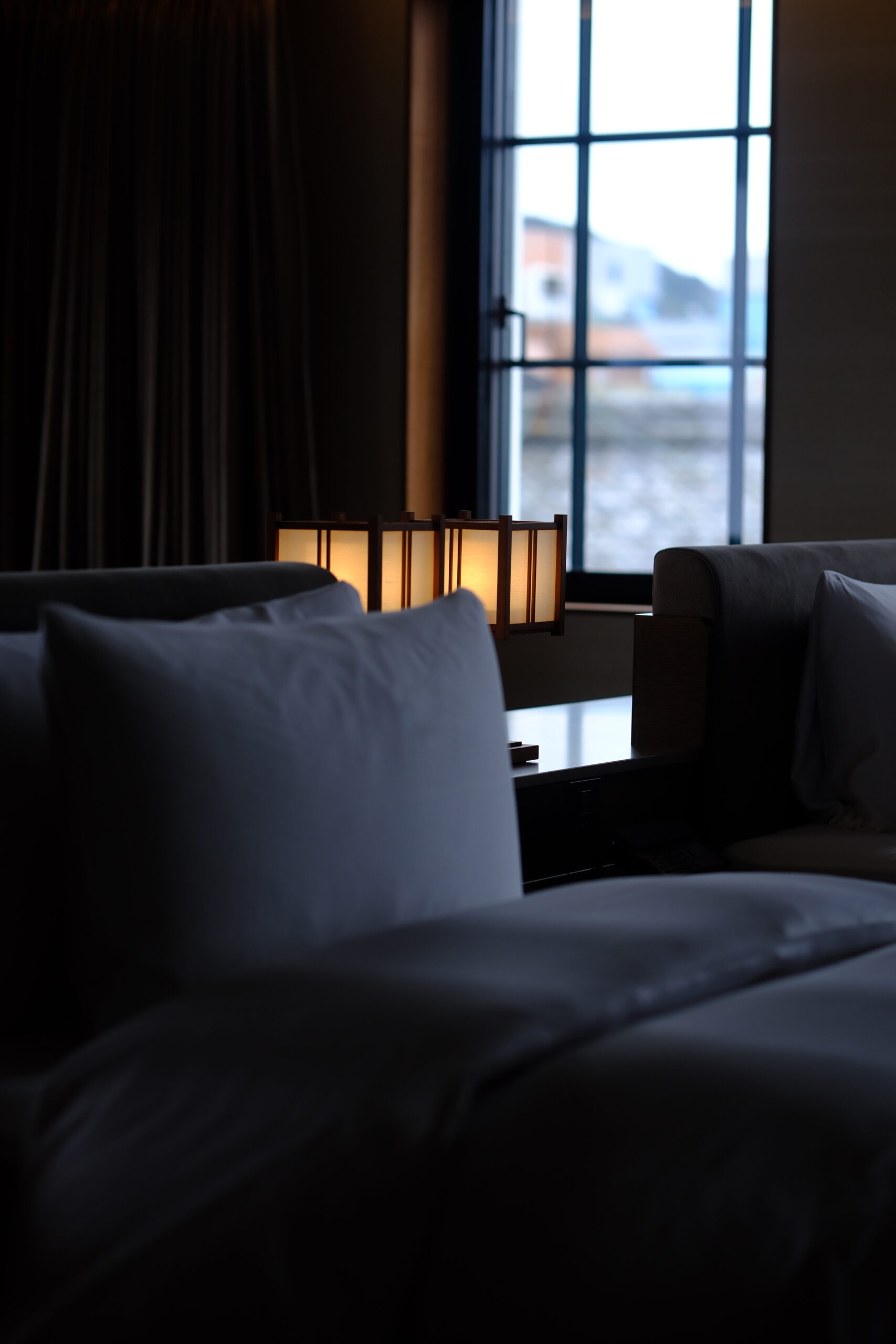
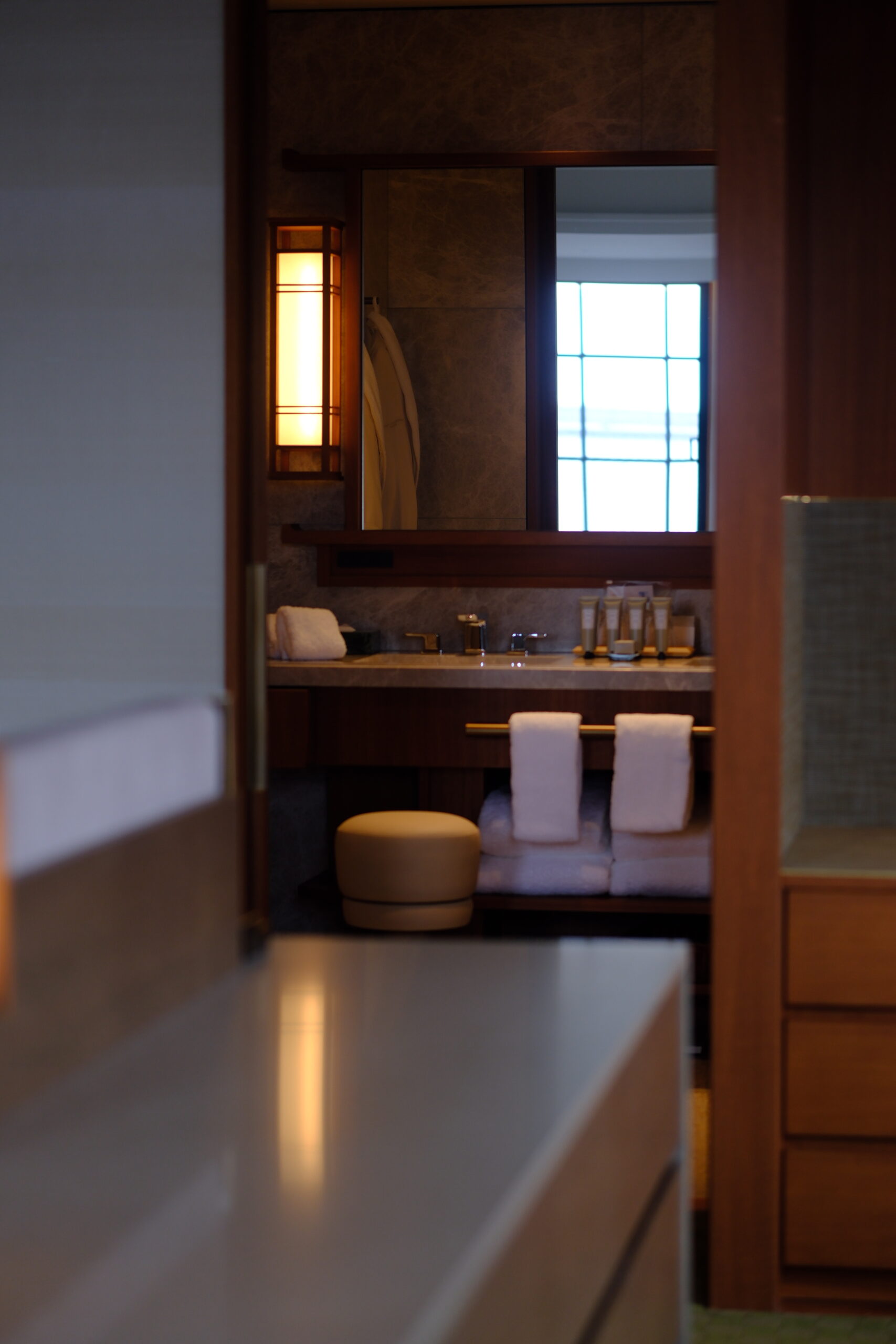
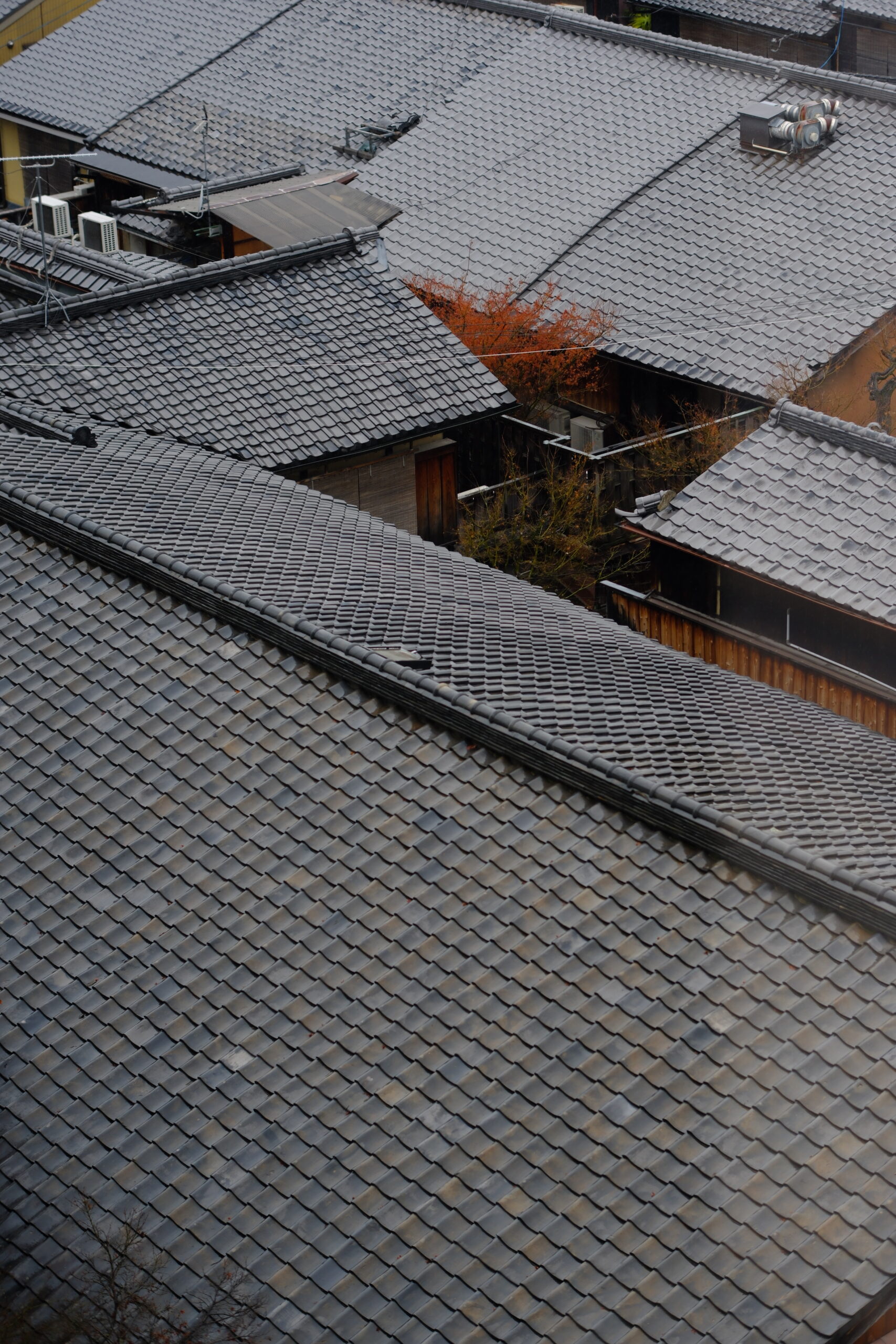
Each room offers a different perspective of Gion. From mine, the generous window framed a quiet tapestry of tiled rooftops belonging to teahouses and refined restaurants in the neighborhood.
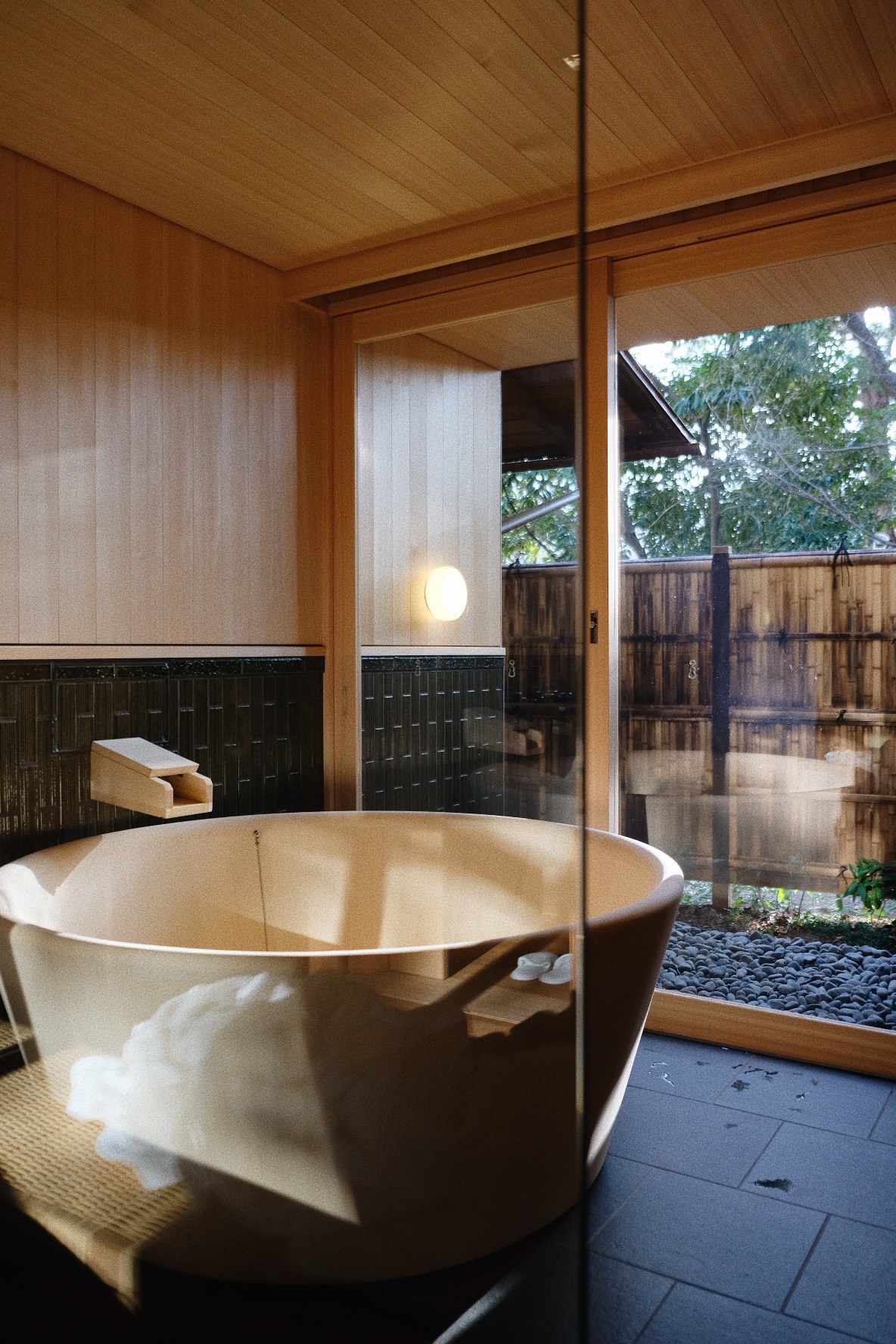
The suites, however, are where Sakakida’s creativity truly comes alive. Each is individually and distinctly designed, offering something special for any design enthusiast. You can sense that he genuinely enjoyed shaping these spaces.
The Imperial Suite features a vast terrace complete with a private gazebo (perhaps a homage to Japanese hospitality), while the 1,108-square-foot Yasaka Suite stands out with its vibrant green carpet, beautifully harmonizing with the original architecture.
And not to forget, the hotel also offers an impressive basement pool and gym. While I didn’t get the chance to experience the wellness offerings this time, it gives me a reason to return perhaps for a quiet, indulgent spa session.
CONCLUSION
So, is this the right hotel for you? If you’re drawn to an intimate atmosphere with a strong design focus, I would absolutely recommend this refined and elegant property. Its quieter energy makes it especially well suited for smaller groups, couples, and solo travelers.
Gion, while often lively with visitors, remains a prime location. Early morning and evening walks are particularly serene, and the hotel offers easy access to the city while still feeling tucked away.
Personally, I would place this hotel among my top five luxury stays in Kyoto.
The Imperial Hotel, welcome to Kyoto.
Words: Sara Aiko
Photos: Sara Aiko and Masatomo Moriyama (Photos 1, 7 and 11)