THE IMPERIAL HOTEL KYOTO – In with the Old and New

Stay

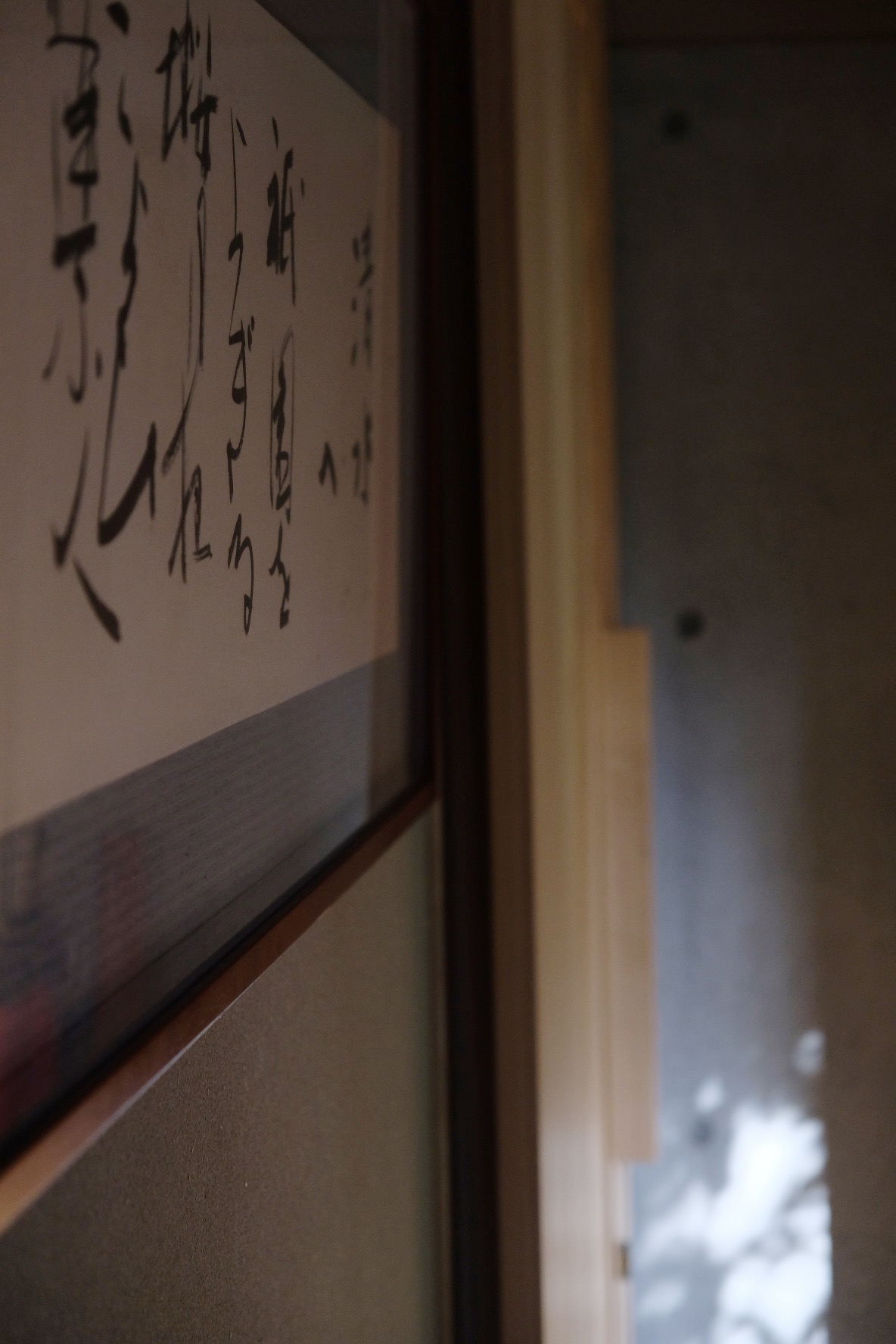
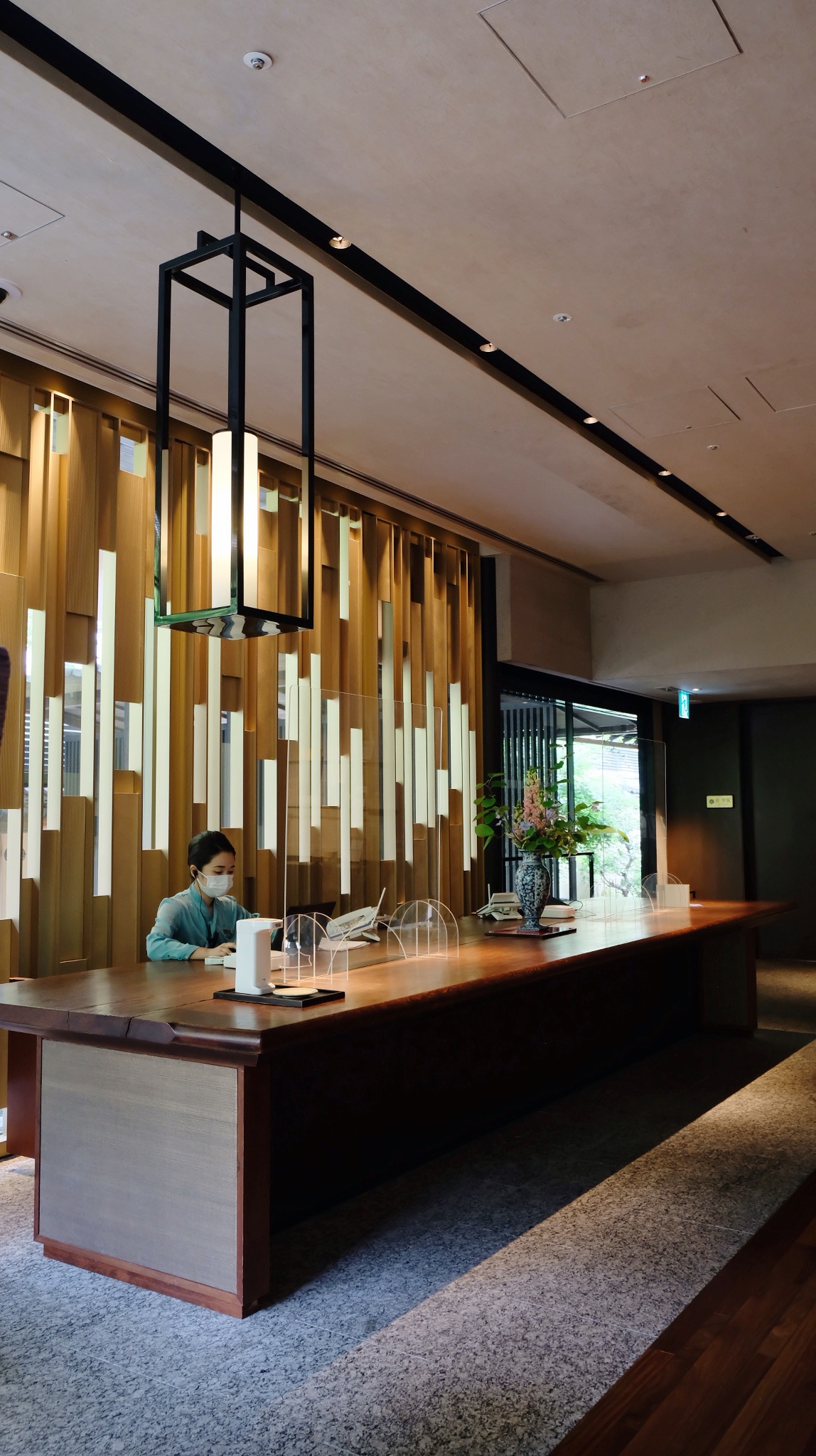
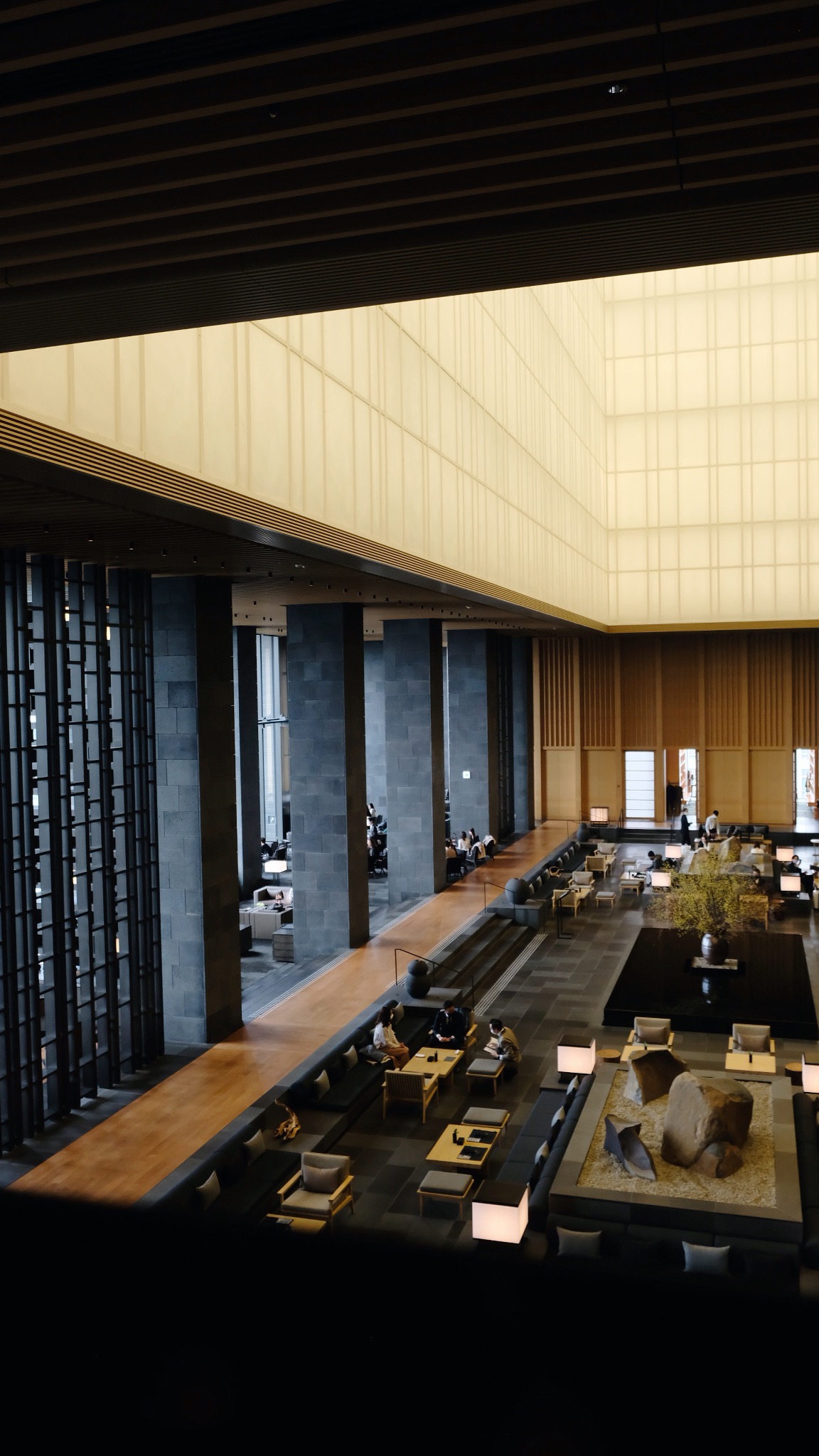
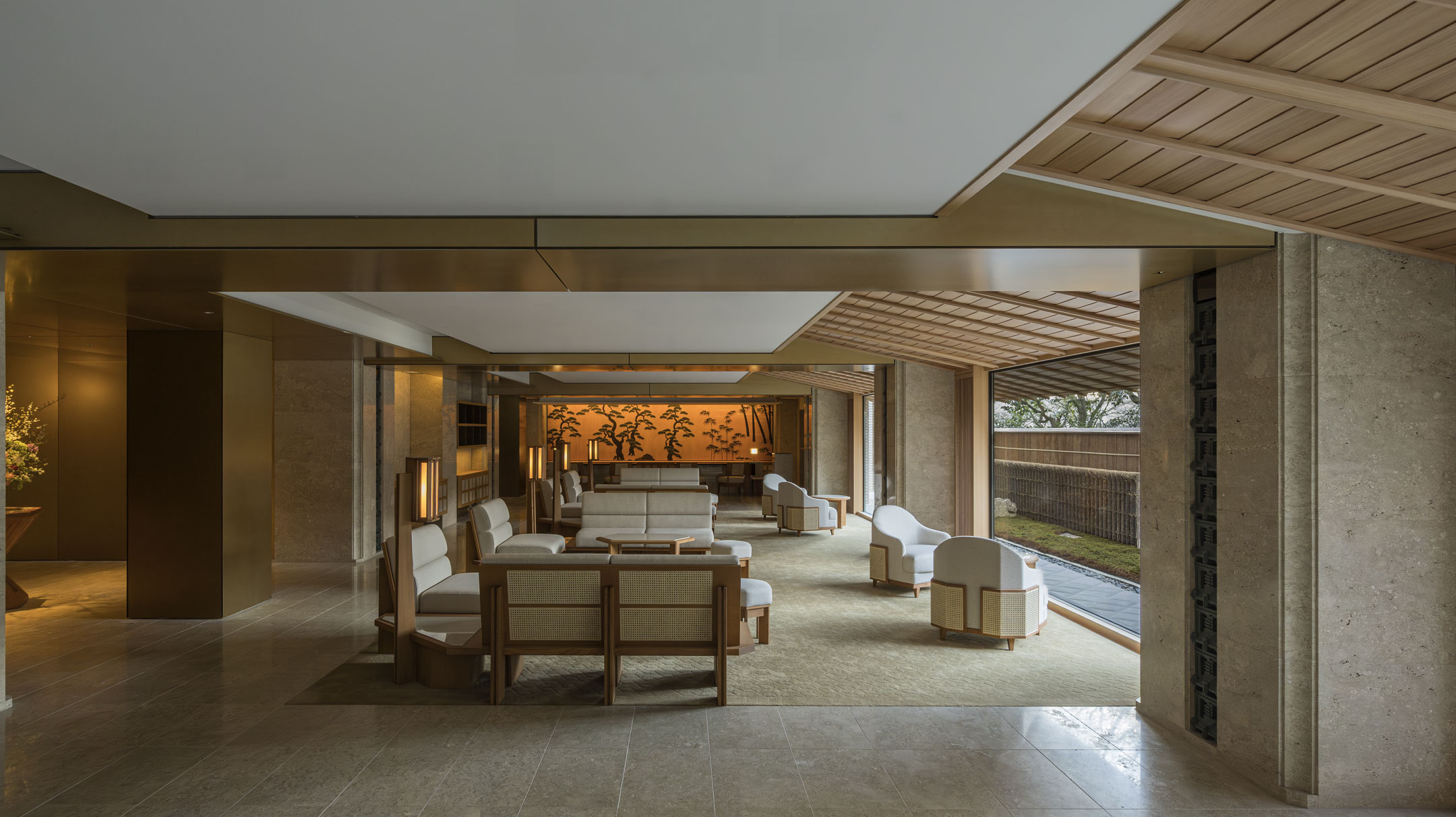
No matter what is said it is Gion I love. Even when I sleep beneath my pillow the water flows…   Written in the early 20th century by poet Yoshii Isamu, who held a deep admiration for Gion, this poem captures the quiet, enduring hold the district has long had over artists, tastemakers, and cultural figures.   Gion remains a cultural hub, the discreet heart of Kyoto where geiko and maiko entertain behind closed doors, and rows of traditional machiya line softly glistening stone pathways. It is a world shaped by nuance and discretion, where entry is still earned, and where even one of Japan’s most celebrated designers would not pass without proper introduction.   It is perhaps only fitting, then, that the new Imperial Hotel, a prestige Japanese hotel brand, has opened its doors here within the walls of a historic theater dedicated to the performing arts.   The 55-room Imperial Hotel, Kyoto marks the brand’s first new opening in over 30 years, bringing its portfolio to four properties and extending a legacy that spans 135 years.   The original Imperial Hotel in Tokyo was the first in Japan to host international luxury guests, setting a new standard for hospitality in the country. Its celebrated second building, designed by Frank Lloyd Wright, was conceived as the epicenter of Tokyo’s social life, a place where architecture and culture merged.   In much the same way as Gion, it became a stage for cultural gathering: a meeting point for world leaders, cultural figures, and film stars, where social gathering unfolded with sophistication.

Hiroshi Sugimoto x Ryosoku-in Temple ‘Everyday is a stormy day’

Spaces

KYOTO

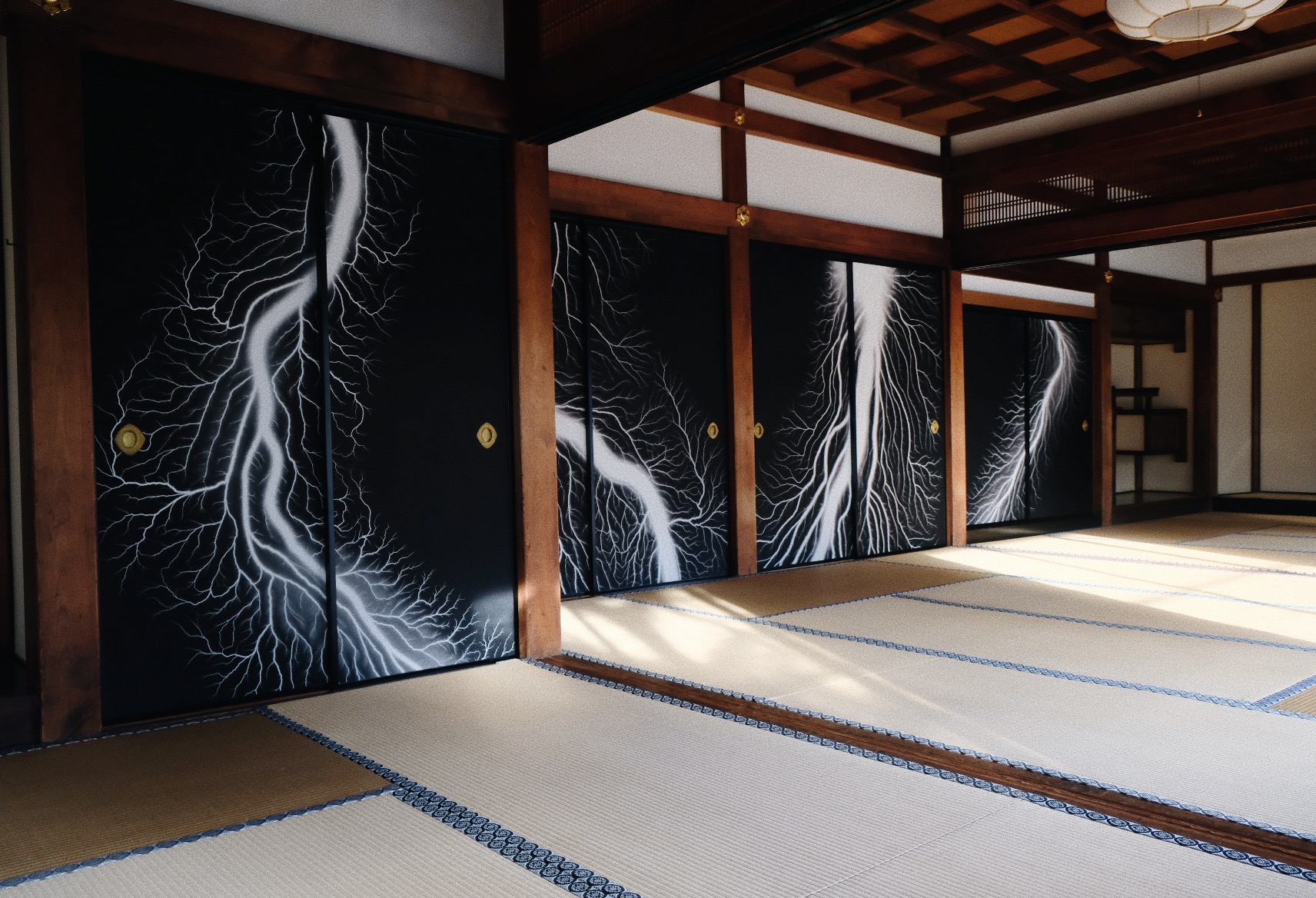
With works like ‘Sea of Buddha’ and ‘Opticks’ artist Hiroshi Sugimoto’s  often explored the world of  religion, this year he collaborated with Ryosoku-in temple to again express spirituality and human connection through his artistic creations .   From November 1st-14th Ryosuku-in held a special exhibition “Hiroshi Sugimoto:  Every day is a stormy day” in Gion Kyoto.   Sugimoto’s photos of lightening and rain, explores the idea that we can not foresee the future but what’s important is to have inner peace, so one is not rocked by external factors. A message perfect for this day and age. The Fusuma collaboration is Sugimoto’s  first ever collaboration. Sugimoto’s  photos are printed on high quality washi paper, a technique according to Ryosoku-in’s deputy head priest Toryo Ito wasn’t possible 7 years ago, ‘It’s not that the technique wasn’t available, it’s that it wouldn’t have been up to Sugimoto’s  standards’. The washi paper was sent to a technician who works in a printing studio in New York, according to Toryo, he’s the only person in this world who’s capable to execute this complex printing technique- even then it took them many trial and errors to get it the the standard Sugimoto was satisfied with.   Sugimoto and Toryo who have a close relationship have been talking for many years about collaborating and it was because of the pandemic that they were able to make the exhibition into a realty, ‘Its very rare that Sugimoto  stays in Japan for such a long time, we were lucky to make this exhibition into a reality. Its all about fate and timing’, says Toryo.   The 2 weeks exhibition has come to a close but Toryo mentions there will be opportunities again next year where people will be able to view the extraordinary work. Toryo also hopes people who are living outside of Japan can visit to view the work in the near future.

AA IWAKURA- Hakimono creations and curation

Spaces

KYOTO

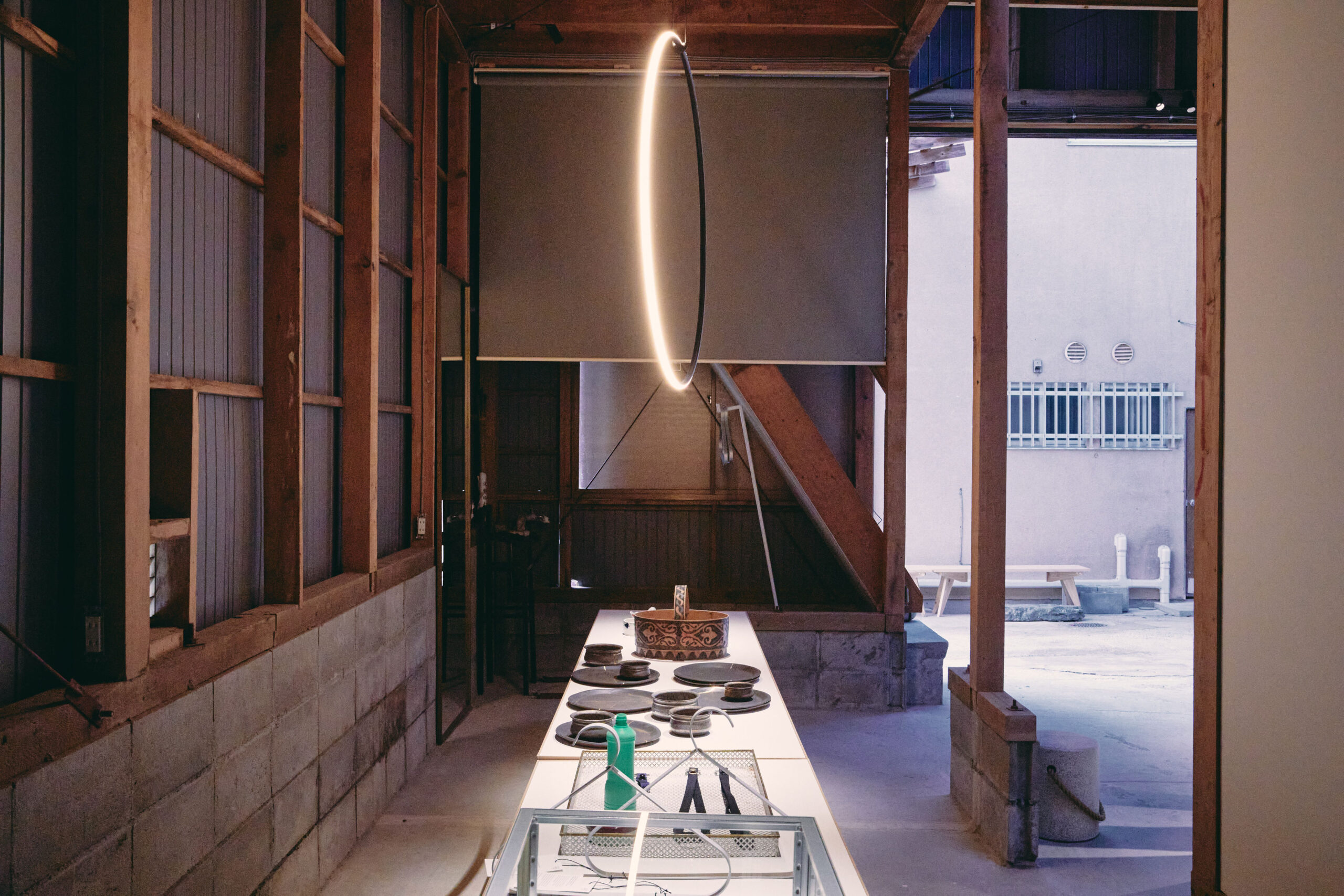
Iwakura, Kyoto – a suburb surrounded by mountains perhaps twenty-five minutes by car outside of central Kyoto. A place not quite inconvenient, but not too convenient, either. Despite this, Iwakura has recently become an area frequented by young hip Kyotonians (a term coined by Gils Peterson) and out-of-towners who make the train or bus trip for one mission: to visit AA Sekizuka, a gallery and workshop headed by hakimono footwear craftsman Shinji Sekizuka. (You can find out more about Shinji here!)   Shinji, who designs and sells his own hakimono creations, wanted to build a gallery attached to his work space so that people would be more motivated to stop by. “You know, it’s a little intimidating for customers to visit the hakimonoworkshop just to look at my footwear. I wanted to give them variety, some other reasons to visit.”  His work space is divided into two sides, the glass room where you can watch Shinji create the hakimono by hand and the open space where you can see, touch, or order a custom-made pair.   Attached to the workshop is the gallery, where he sells everything from apparel and photography to shoes and interior pieces. Shinji didn’t want to call the gallery a “store”, since he selects and curates the products personally with various artists and designers, and wanted the space to help showcase their work. The gallery usually has ten different exhibitions throughout the year.   In order to realize his design, Shinji worked directly with the architect to create AA Sekizuka. Having a big, comfortable space was Shinji’s priority, which is why he decided to open his gallery/workshop in Iwakura.  Out of the city, his focus is sharper… and he can concentrate on bringing his hakimono creations to life and finding them new homes with people who will appreciate them as a part of their everyday lives.   AA IWAKURA: https://hakimonosekizuka.com/collections/岩倉aa WORDS: Sara Aiko PHOTOS: KINGY